Feed back
 Privacy Policy
Ever looked at your birth chart and thought, What on earth do all these symbols mean? You’re not alone. For most beginners, a natal chart looks more like an ancient map than a personal guidebook. But here’s the good news: with a little guidance, you can unlock powerful insights into your personality, relationships, and life path using birth chart interpretation.
Whether you’re just curious about astrology for beginners or ready to dive deep into your cosmic blueprint, this easy-to-follow natal chart guide will help you make sense of it all—one step at a time.
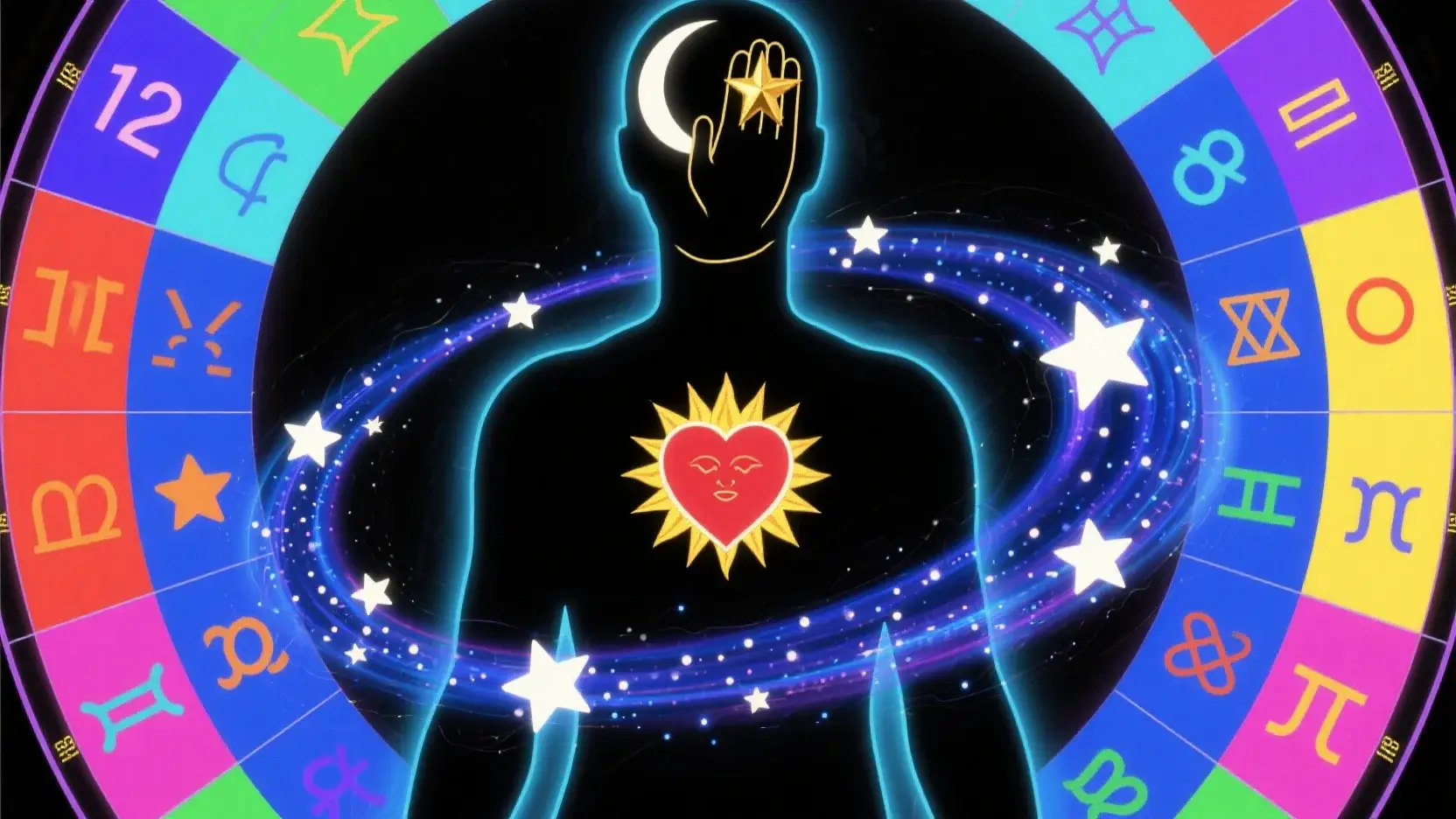
A birth chart—also called a natal chart—is a snapshot of the sky at the exact moment you were born. It maps the positions of the planets, the Sun, and the Moon based on your date, time, and place of birth.
Think of it as your celestial DNA. It reveals your strengths, emotional patterns, communication style, career inclinations, and more. While your zodiac sign (a.k.a. “Sun sign”) is just one piece of the puzzle, your full chart gives you a much deeper, richer picture.
To get started, you’ll need your:
You can generate a free chart from reputable astrology platforms like Astro.com, Cafe Astrology, or Astro-Seek.
These three elements are your astrological foundation. Let’s break them down:
Your core identity, life purpose, and ego. It answers the question, Who am I at my core?
Your inner world—emotions, instincts, and how you respond when you feel vulnerable.
This is the zodiac sign that was on the horizon at the moment of your birth. It shapes how you present yourself and how others perceive you.
Example: A person with a Leo Sun, Scorpio Moon, and Capricorn Rising might come across as serious and reserved (Capricorn), feel deeply and intensely (Scorpio), but still carry a confident core identity (Leo).
Understanding your Big Three can immediately make your chart feel more relatable and human.
Imagine the chart as a wheel divided into 12 slices—each slice is called a “house.” Each house represents a different area of life.
Here’s a quick guide:
The planets in these houses show where energy is focused in your life.
Each planet governs specific qualities and parts of your personality:
Example: If Mercury is in Gemini in your 3rd house, you’re likely an excellent communicator—quick, witty, and possibly drawn to writing or teaching.
Aspects describe the angles planets form with one another. They reveal how different parts of your personality either work together or create tension.
Here are the key ones:
Example: A Venus square Saturn might indicate difficulty expressing affection, especially early in life, but also the potential for building lasting relationships with time.
Now that you understand the parts, the magic happens when you read them together. Think of it as a personality narrative that’s uniquely yours.
Ask yourself:
The more you observe your chart, the more patterns you'll begin to notice. That’s when astrology becomes less about prediction and more about reflection.
You’ll still be able to find your Sun and most planet placements, but your rising sign and house positions may be inaccurate. Try asking family or checking birth records.
No! Even professional astrologers reference notes. Focus on what resonates and build from there.
Your natal chart stays the same, but astrologers also use transits and progressions to track how the planets affect you as you evolve.
Reading your natal chart can feel overwhelming at first—but don’t let that stop you. Astrology is a lifelong journey of self-discovery. Even just understanding your Big Three and planetary placements can unlock new levels of self-awareness.
So take your time. Bookmark this natal chart guide. Use it as a jumping-off point to explore what resonates with you. Because once you get the hang of birth chart interpretation, you’ll see—there’s so much more to you than just your Sun sign.
Smit
|
2025.05.08